Electric Bike Buying Guide for Canada
Buying an e-bike is a $1,500–$3,000 decision you'll live with for years. This guide covers the five things that actually determine whether you'll love your e-bike: motor type, battery and range, e-bike classes, Canadian regulations, and fit. Read it before you read any "best of" list — including ours.
Hub motors vs. mid-drive motors
The motor is the heart of the bike. There are two fundamental designs:
Hub motors (in the wheel)
The motor sits in the hub of the front or (more commonly) rear wheel and drives it directly. Hub motors are simpler, cheaper and very reliable — which is why most e-bikes under $2,500 use them. A good 500 W rear hub motor with 80 Nm of torque (like the Bafang units in Rize's lineup) handles city hills and moderate grades comfortably. Downsides: the weight sits in the wheel (slightly awkward handling), and changing a flat on a hub-motor wheel is more fiddly.
Mid-drive motors (at the cranks)
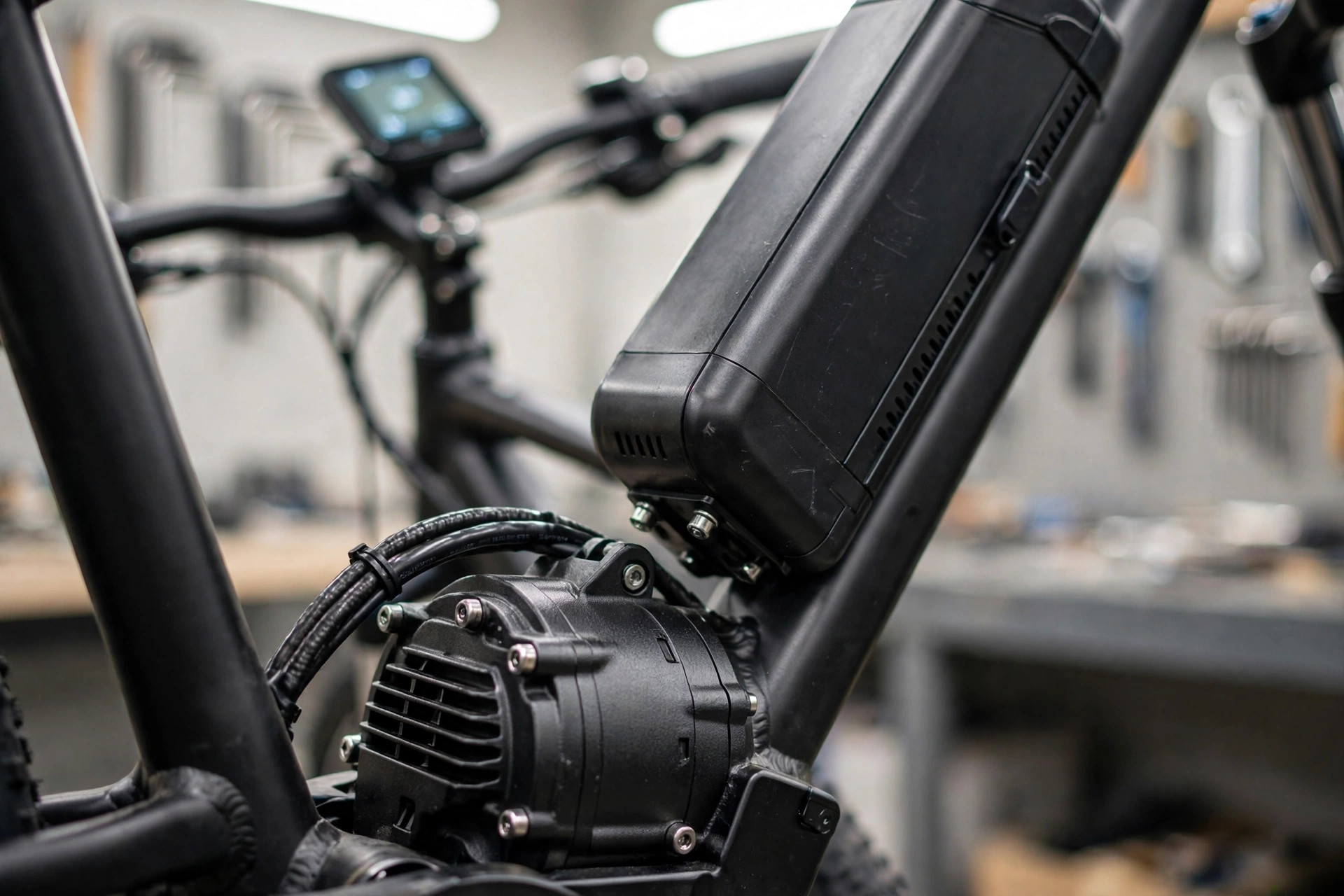
The motor sits at the bottom bracket and drives the chain, so it benefits from the bike's gears — like having a lower gear for the motor on steep climbs. Mid-drives climb better, balance the bike's weight centrally, and are the standard for e-mountain bikes. They cost more, wear chains and cassettes faster, and are overkill if your riding is mostly flat commuting.
Bottom line for most Canadian buyers: a torquey hub motor (65–80 Nm) is plenty for commuting and recreational riding, and it keeps the price down. Choose mid-drive if you regularly climb serious grades or ride technical trails.
Torque sensor vs. cadence sensor
This matters more than many buyers realize. A cadence sensor detects that you're pedalling and switches the motor on at a fixed level — simple, but it can feel jerky. A torque sensor measures how hard you're pushing and scales assistance proportionally — smoother, more natural, and more efficient. Torque sensors used to be premium-only; they're now appearing on sub-$2,000 bikes, and they're worth prioritizing.
Battery and range math
Forget marketing claims for a moment and learn the one number that matters: watt-hours (Wh). It's voltage × amp-hours (a 48 V 15 Ah battery = 720 Wh), and it's the size of your fuel tank. More Wh = more range, all else equal.
A rough rule of thumb: an e-bike consumes about 10–20 Wh per kilometre depending on assist level, hills, rider weight, wind and temperature. So:
- ~400–500 Wh (small commuter packs): roughly 25–40 km of real-world range
- ~670–720 Wh (the sweet spot): roughly 40–70 km
- 1000 Wh+ (large or dual batteries): 70 km and up
Manufacturer "up to" range figures assume ideal conditions — light rider, low assist, flat ground, warm weather. Halve the claimed maximum for winter riding or hilly commutes and you'll rarely be disappointed. Also note: batteries degrade slowly over hundreds of charge cycles, so buying more capacity than you need today is buying range for year three.
Cold cuts range. Lithium batteries deliver noticeably less energy below freezing. If you'll ride through a Canadian winter, treat battery capacity as even more important — see our winter battery guide.
E-bike classes explained
Canada's federal framework doesn't use numbered classes the way the US does, but manufacturers and retailers use them constantly, so you need to speak the language:
| Class | Assist type | Max assisted speed | Throttle? | Legal in Canada? |
|---|---|---|---|---|
| Class 1 | Pedal-assist only | 32 km/h | No | Yes — the standard legal e-bike |
| Class 2 | Pedal-assist + throttle | 32 km/h | Yes | Yes, within 500 W / 32 km/h limits |
| Class 3 | Pedal-assist only | 45 km/h | No | Generally no — exceeds the 32 km/h definition |
Many Canadian-market bikes (including Rize's) ship with configurable settings — Class 1, 2 or 3 modes you can switch between. The key point: the bike must be set within your province's legal envelope when you ride it on public roads. A bike capable of 45 km/h isn't automatically illegal to own, but riding it in Class 3 mode on a public road generally puts it outside the power-assisted bicycle definition.
Canadian e-bike rules
This is the section most buying guides get wrong, so we'll be careful. We are not lawyers, regulations change, and provinces differ — always verify current rules with your provincial transportation authority before buying.
The federal baseline (Transport Canada's power-assisted bicycle definition, now largely administered by provinces) describes a power-assisted bicycle as having:
- Operable pedals and handlebars, three or fewer wheels
- 500 W or less of continuous motor output (this is continuous/nominal rating, not momentary peak)
- Motor assistance that cuts out at 32 km/h on level ground
- A motor that disengages when you stop pedalling, brake, or release the throttle
Provinces then layer on their own requirements: minimum rider ages, helmet rules, and where different classes may ride (roads vs. bike paths vs. trails). As one verified example, British Columbia classifies e-bikes as "motor-assisted cycles" requiring riders to be 16 or older, with no licence or insurance needed for compliant bikes — but other provinces set their own specifics, and trail access rules (including in national and regional parks) are stricter and change frequently.
What this means when shopping:
- A bike rated above 500 W continuous (750 W, 1000 W models) may be classified as a motor vehicle in your province — requiring a licence, registration and insurance — even if the seller ships it to Canada.
- "Unlockable" speed settings don't make an over-limit bike legal; the configuration you ride in is what counts.
- Check your province's transportation ministry site — not a retailer's blog — for the current rules. If a deal seems too powerful for the price, the legality question is probably why.
Fit, brakes and the test ride
- Sizing: e-bikes are heavy — a poor fit is punishing. Check the manufacturer's height range (most list one), and prefer step-through frames if mounting is a concern.
- Brakes: at e-bike weights and speeds, hydraulic disc brakes are meaningfully better than mechanical discs — stronger, less hand fatigue, better in rain. Prioritize them.
- Weight: expect 55–80 lbs. If you'll carry the bike (stairs, car racks), weight matters enormously — check your rack's rating too.
- Warranty and support: a 2-year warranty from a Canadian company with a domestic service presence is worth more than a slightly lower price from an unreachable seller.
- Test ride if you can: some Canadian brands (Rize has a Richmond, BC showroom) offer test rides. Twenty minutes on a bike teaches more than twenty reviews.
Ready to compare actual models? Start with our best e-bikes in Canada comparison, or jump to budget picks under $2,000.
Frequently asked questions
Do I need a licence or insurance for an e-bike in Canada?
Not for a compliant power-assisted bicycle (500 W or less continuous, assistance cut at 32 km/h, operable pedals) — it's treated like a bicycle, though helmet rules apply everywhere. Bikes exceeding those limits can fall into motor-vehicle categories that do require licensing and insurance. Confirm with your province.
How long does an e-bike battery last?
Battery range per charge depends on capacity and conditions (see the math above). Battery lifespan is typically rated in charge cycles — quality packs are often rated around 800 cycles before significant degradation, which is several years of regular commuting.
Can I ride an e-bike in winter?
Yes — with the right bike and preparation. Fat tires, lower tire pressure, indoor battery storage and realistic range expectations make winter e-biking practical across much of Canada. Our winter guide covers it in detail.
Are throttle e-bikes legal in Canada?
Generally yes, within the power-assisted bicycle definition — throttles (Class 2 style) are permitted federally as long as the 500 W and 32 km/h limits hold and the motor cuts when braking. Some specific trails and parks restrict throttles, so check local trail rules separately from road rules.