Best Fat-Tire E-Bikes for Canadian Winters
The Canadian angle nobody else covers properly
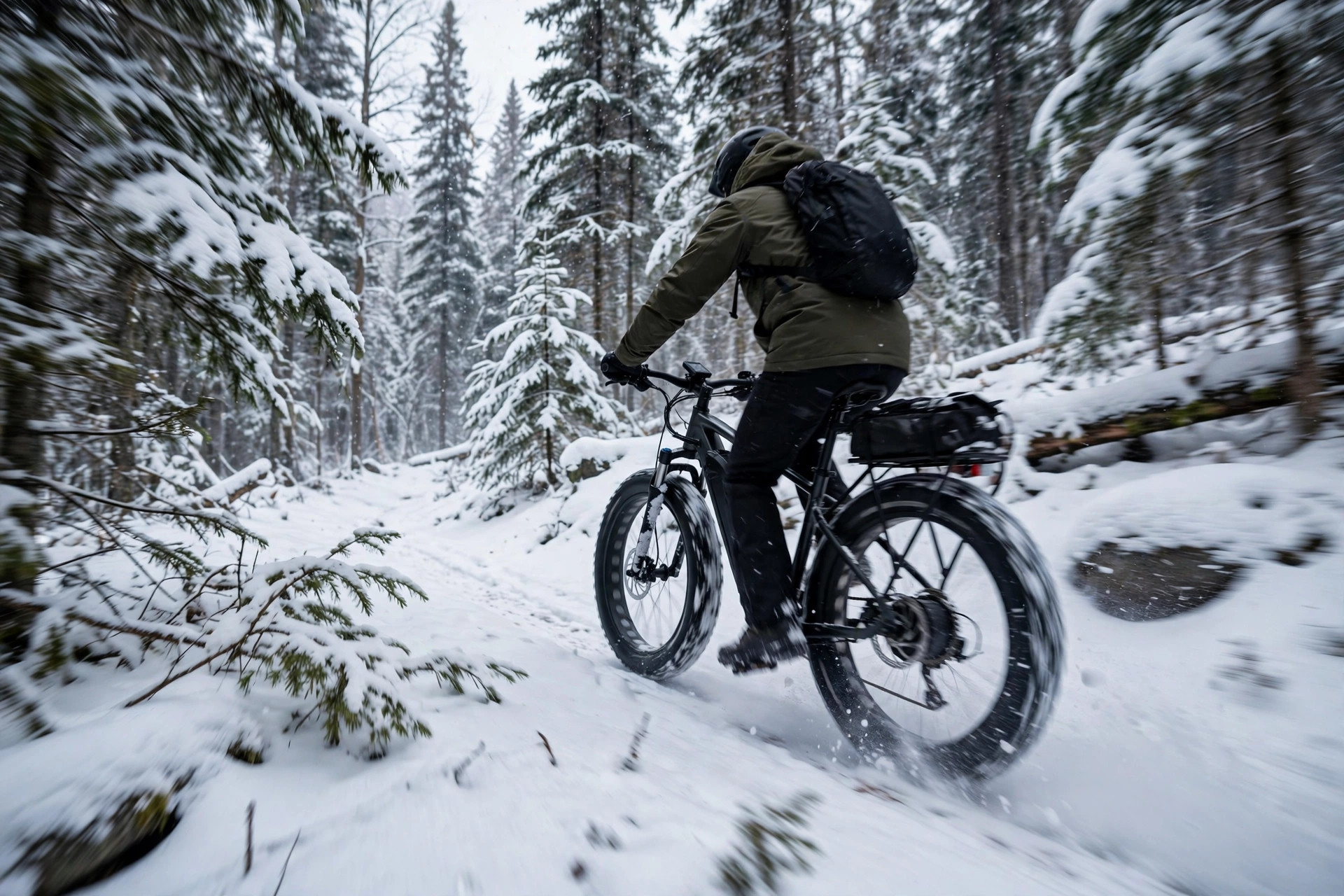
Most e-bike review sites are written for California. This one isn't. In much of Canada, an e-bike that can't handle snow, slush and salt is a five-months-a-year toy. Fat-tire e-bikes — typically 4-inch-wide rubber — float over packed snow and churn through slush where narrow commuter tires skate and sink. They won't turn black ice into a safe surface (nothing does), but for the long Canadian shoulder season and real winter commuting, they're the most practical choice going.
Why fat tires for winter
A standard e-bike tire is 2 to 2.5 inches wide. A fat tire is 3.8 to 4+ inches — roughly double the contact patch. That matters because:
- Floatation: wide tires ride on top of packed snow instead of cutting through it, which is what throws a narrow-tired bike sideways.
- Low pressure: fat tires run at very low pressures (often 5–15 PSI in snow), moulding around uneven frozen ruts for grip.
- Slush and salt: the extra volume shrugs off the half-frozen slurry that coats Canadian bike lanes from November to April.
The trade-offs are real: fat-tire bikes are heavy (often 75–80 lbs), slower on bare pavement, and the wide tires add rolling resistance. The motor compensates for most of that — which is exactly why a fat-tire e-bike makes more sense than a fat-tire acoustic bike for most riders.
Fat-tire picks sold in Canada
These are fat-tire models we could verify against live Canadian retailer pages. All three come from Richmond, BC's Rize Bikes — currently the Canadian company with the deepest verified fat-tire lineup at mainstream prices.
Rize Leisure — $1,999 CAD on sale (list $2,499)
The Leisure is our top winter pick because it combines the three things that matter most in snow: 26″ × 4″ fat tires, a torque sensor for smooth power delivery (abrupt power is your enemy on ice), and a big 720 Wh Samsung battery — cold saps range, so starting with a large pack matters. Hydraulic disc brakes stop reliably in the wet. Full specs in our main comparison.
Rize Leisure Step — $2,499 CAD
Same fat-tire platform as the Leisure with a low step-through frame — genuinely useful in winter when you're wearing bulky boots and layers and don't want to swing a leg over a tall top tube on an icy sidewalk. 500 W Bafang motor, torque sensor, 720 Wh battery, 26″ × 4″ tires.
Rize Blade — from $1,599 CAD (currently sold out)
Retro moped styling with 4-inch fat tires and a 750 W motor at the lowest entry price in the lineup — when it's in stock, which it wasn't at our last check. Worth watching for restocks if you like the style, but note the 750 W legality caveat for Canadian roads.
What about studded tires? Dedicated studded fat-tire tires exist and are the gold standard for icy commutes, but availability in Canada is seasonal and sizing must match your rims exactly. If you ride all winter on maintained-but-icy bike lanes (think Ottawa, Montreal, Winnipeg), ask a local bike shop about studded options for your specific wheel size before the first snowfall — they sell out.
Cold-weather battery care
Lithium-ion batteries lose usable capacity in the cold — expect noticeably shorter range below −10 °C, and don't be surprised if a battery that delivers 60 km in July manages far less in January. The chemistry isn't damaged by riding in the cold, but these practices protect your investment:
- Store and charge the battery indoors. Never charge a frozen battery — bring it inside and let it reach room temperature first. Most manufacturers advise charging between roughly 10 °C and 25 °C; check your manual.
- Remove the battery when parking outside. If the bike lives in an unheated garage, take the battery in with you. A neoprene battery cover helps on the ride itself.
- Expect less range and plan for it. Start winter with a bigger battery than you think you need — one reason the 720 Wh packs on the Leisure models are good winter picks.
- Keep it topped up, not topped off forever. For storage between rides, a mid-range charge in a cool (not freezing) dry place is kinder to the cells than sitting at 100% for weeks.
Riding safely in snow and ice
- Lower your tire pressure. Drop fat tires toward the low end of their rated range on snow days for a bigger contact patch; pump back up for bare pavement.
- Use low assist and gentle throttle. Torque sensors help here — smooth, proportional power won't break the rear tire loose the way a sudden throttle punch will.
- Brake early, mostly rear. The front wheel washing out is how winter crashes happen. Slow down well before intersections, where polished ice hides under snow.
- Be visible. Canadian winter means riding in the dark. Use a bright front light and a flashing rear light even where not legally required — drivers don't expect cyclists in February.
- Dress for the windchill of 25–30 km/h. E-bikes move fast enough to generate serious windchill; bar mitts (pogies) and a balaclava matter more than they do on a regular bike.
Winter maintenance
Road salt is the enemy. Rinse the bike (not with a pressure washer — it forces water into bearings and electronics) after salty rides, dry it, and keep the chain lubed with a wet-conditions lubricant. Check brake pads more often; grit wears them fast. Store the bike somewhere it can dry rather than sitting in a salty puddle in an unheated garage. These habits matter more than any accessory purchase.
Honest limits: fat tires help enormously on snow and slush, but no tire grips black ice reliably without studs, and deep unplowed snow will defeat any bike. Winter e-biking in Canada is practical on plowed routes — it's not a snowmobile. Ride to conditions.